
Rental property inspection checklist
Updated October 1, 2026
Fill this in on your iPhone, on site, with Sitewise.
Get the appA rental inspection is worth what its photos can prove later. The checklist below is for landlords and property managers who walk their own units, and it is built around the one question every inspection eventually has to answer: what did this room look like before, and what does it look like now?
That question decides deposit deductions, and it gets decided by whoever has the better record. Usually that is whoever took dated photos of the rooms in good condition, because the damage itself is easy to photograph and the baseline is the part people skip.
Three inspections, one record
Most tenancies get three kinds of walk, and the checklist is the same for all of them.
| Inspection | When | What it is for |
|---|---|---|
| Move-in | Before the tenant takes the keys | The baseline every later claim is measured against |
| Routine | During the tenancy, with notice | Catching leaks, mold and damage while they are small |
| Move-out | After the tenant has left and cleaned | The comparison that decides the deposit |
Use the same room order every time, and keep it written at the top of the checklist. Entry, kitchen, living room, hall, bathrooms, bedrooms, laundry, exterior, then meters and keys. When the move-out walk follows the move-in order exactly, comparing the two is a matter of reading down two lists instead of matching photos by eye.
A routine inspection needs notice, and the rules on how much differ by state and by lease. Check the lease and your local landlord-tenant law before you book one. Turning up unannounced is the fastest way to make a tenant hostile to the move-out walk.
The room by room checklist
For each room, check every item and record a condition, a note on anything you see, and a photo number. Rows in good condition get written down as well.
Every room:
- Walls and ceiling: holes, cracks, scuffs, stains, and marks behind the door where the handle lands
- Floor: wear paths, burns, stains, lifted edges, damage at thresholds
- Windows: glass, locks, screens, blinds or curtains, condensation stains on the sill
- Doors: hinges, latch, lock, and the frame
- Lights and outlets: each one switched on or tested
- Smoke and carbon monoxide alarms: tested, with the time recorded
Kitchen:
- Worktops, including burn marks beside the hob
- Oven, hob and extractor, inside and out
- Fridge, including the door seals and shelves
- Dishwasher, run briefly if it can be
- Under the sink: the cabinet floor, the trap, any sign of a slow leak
- Cabinet doors and drawer runners
Bathrooms:
- Sealant along the tub, shower tray and basin
- Grout, and any mold on the ceiling above the shower
- Toilet: flush, seat, and the floor around the base
- Taps and drains, run for long enough to see whether they drain freely
- Extractor fan
Exterior and building:
- Garden, balcony or patio surfaces
- Gutters and downpipes, where you can see them from the ground
- Bins, sheds and any outbuildings that come with the lease
- Meter readings, with the serial number in the same photo
- Keys, fobs and remotes, counted and photographed laid out together
Photograph the good rooms
The photo that wins a deposit argument is usually the move-in photo of the same wall, eleven months earlier, with nothing on it.
So photograph each room wide from the doorway first, then every element that could be argued about later, whether or not anything is wrong with it. Take the wall behind every door. Take the carpet at the threshold. Take the worktop next to the hob. If those three are clean at move-in and on file, the commonest move-out arguments already have an answer.
For any mark you do find, take two shots: one close with something for scale, and one from far enough back that anyone can tell which wall it is on. A close-up of a scuff on its own could be any wall in any flat.
The date on the photo carries as much weight as the image. A phone photo with a capture time and a location stamped into the record is much harder to argue with than one whose date somebody has to vouch for.
Write what you see, not what it costs
Notes describe the mark. "Two scuffs, each about 2 inches, left of the light switch at shoulder height" is a note. "Tenant damage, repaint" is a decision, and a decision written into the inspection reads as if it was made before you walked in.
Keep costs, quotes and deductions out of the checklist entirely. They belong in a separate document produced once someone has priced the work. Mixing them in turns a condition record into an invoice, and an invoice invites an argument.
Wear is worth recording with the tenancy length beside it. "Carpet worn on the path from door to window, consistent with 14 months of use" is a defensible position. "Carpet worn" leaves the other side to supply the context.
A move-out walk, compared
Unit 2, 41 Harrow Lane. Move-out inspection, October 1, 2026, 14:00 to 14:40. Compared against the move-in record of September 2, 2025.
| Room | Item | Move-in | Move-out | Photo |
|---|---|---|---|---|
| Kitchen | Worktop right of hob | Good, no marks | Scorch ring about 3 inches across | 6 |
| Kitchen | Under sink | Dry, cabinet floor sound | Cabinet floor swollen at the back, trap dry today | 8 |
| Living | Carpet | Good | Worn path door to window, 13 months of use | 11 |
| Bedroom 1 | Wall behind door | Good, no marks | Handle dent, about 1 inch, paint broken | 15 |
| Bathroom | Tub sealant | Good | Mold along the back joint, full length | 19 |
| Whole unit | Smoke alarms | Tested, sounding | Tested at 14:31, sounding | 22 |
| Keys | Set | 2 door, 1 fob | 2 door, 1 fob, counted with tenant | 24 |
The under-sink row is the one that needs care. A swollen cabinet floor with a dry trap today points at a slow leak during the tenancy, which may be a repair the landlord owed rather than damage the tenant caused. Write down what you saw on the day and leave that question to whoever has to answer it.
Send it the same day
Send the completed record to the tenant the day of the walk, with the photos inside it rather than in a separate album. Give a stated window for comments and keep the reply with the record. A report the tenant saw on the day and did not dispute carries far more weight than one produced weeks later alongside a deduction.
Where Sitewise fits, and where it does not
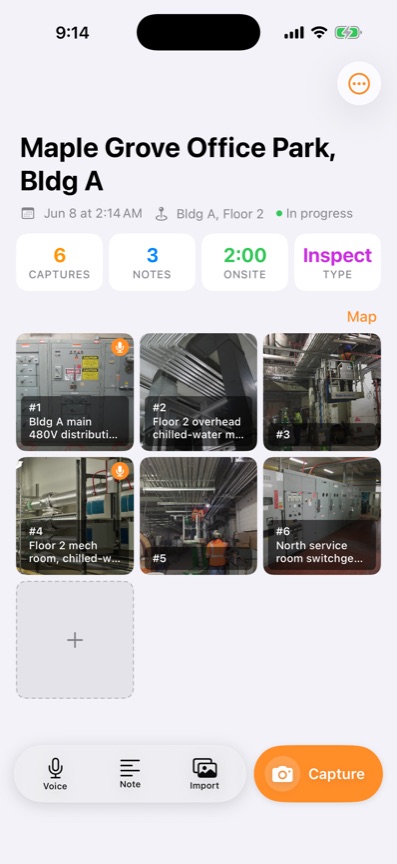
Sitewise runs the walk on iPhone and iPad. Each photo, dictated note, sketch and typed observation is stamped with the time and, with location on, a GPS pin. Voice notes transcribe on the phone, which helps when one hand is holding a torch under a sink. It works in a basement flat with no signal and syncs later. The walk exports as a PDF or DOCX you can email before you drive away.
It is a capture and report tool. It does not manage tenancies, collect rent, schedule inspections, handle maintenance tickets, or take signatures, and it runs only on iPhone and iPad. A landlord with a property management system keeps that system and uses Sitewise for the walk itself.
For the report layout that goes with this checklist, with the condition scale both sides can agree on, see the property condition report template. If the inspection is a buyer's walk before closing rather than a tenancy, the final walkthrough checklist covers it.
Questions people ask
- How often should a landlord inspect a rental property?
- At move-in and move-out every time, plus a routine inspection during the tenancy. Many managers walk a unit once or twice a year between tenancies. The lease and local law decide how much notice the tenant gets, so read both before you book the visit.
- What should I photograph during a rental inspection?
- A wide shot of every room from the doorway, then each mark or defect close up with something for scale. Add the meter readings, the keys, the appliance serial plates and the smoke alarms. Rooms in good condition need photos too, because those are the ones a later argument turns on.
- Can a tenant dispute a move-out inspection?
- Yes, and the usual grounds are that no baseline existed or that the damage is ordinary wear. A move-in record with dated photos of the same rooms, taken in the same order, answers the first. Recording the tenancy length next to worn items answers most of the second.
Related guides
- Property condition report template
A property condition report template for move-in and move-out inspections: room-by-room fields, a condition scale both sides accept, and a filled example.
- Final walkthrough checklist
A final walkthrough checklist for the hour before closing: what to switch on first, what to check room by room, and how to verify the repairs you were promised.
Write this report on site, not in the truck.
Sitewise turns photos, voice notes, sketches, and typed observations into a PDF or DOCX before you leave. iPhone and iPad, iOS 26 or later.
Get the app